In this guide
- A good turnover fits cleaning, fresh linen, restocking and a check of the home into the few hours between check-out and check-in, commonly 11am to 3pm.
- Keep three sets of linen per bed, so a stain, a late laundry delivery or a same-day turnover never leaves a bed unmade.
- Guests pay a cleaning fee that covers the clean and washing the linen. It is part of the total price they see, so it should cover the real cost and no more.
The changeover window
A changeover, or turnover, is everything that happens between one guest leaving and the next arriving: cleaning, laundry, restocking and a check of the home. A common pattern for short lets is check-out at 11am and check-in at 3pm, which leaves about four hours. That window is fixed, and it shapes almost everything else in this guide.
- 11amGuest checks outKeys go back in the lock box and the home is empty.
- 11.15amCleaner arrivesWindows open, beds stripped, bins emptied, dishwasher on.
- MiddayRoom-by-room cleanKitchen and bathrooms first, because they take longest, then bedrooms and living areas.
- 2pmBeds, restock and checksFresh linen on, supplies topped up, any damage or faults noted.
- 2.45pmFinal walk-throughLights, heating and windows set, keys back in place.
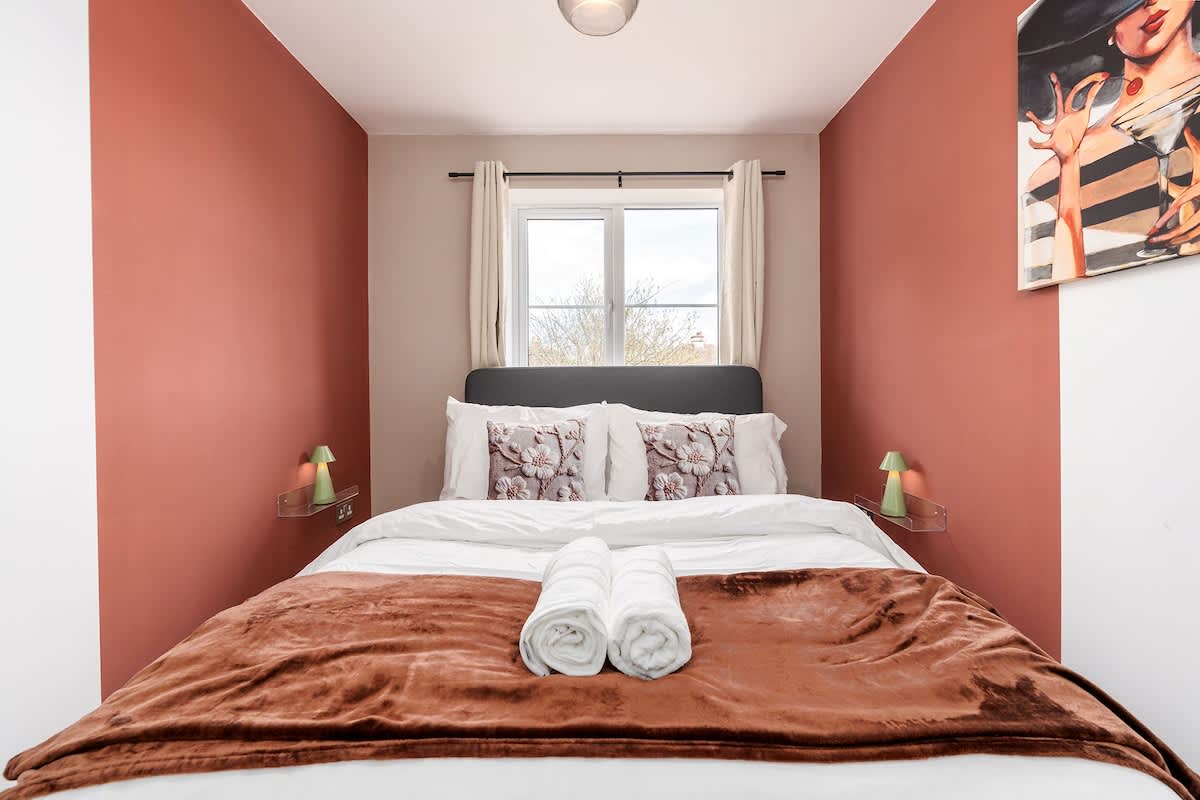
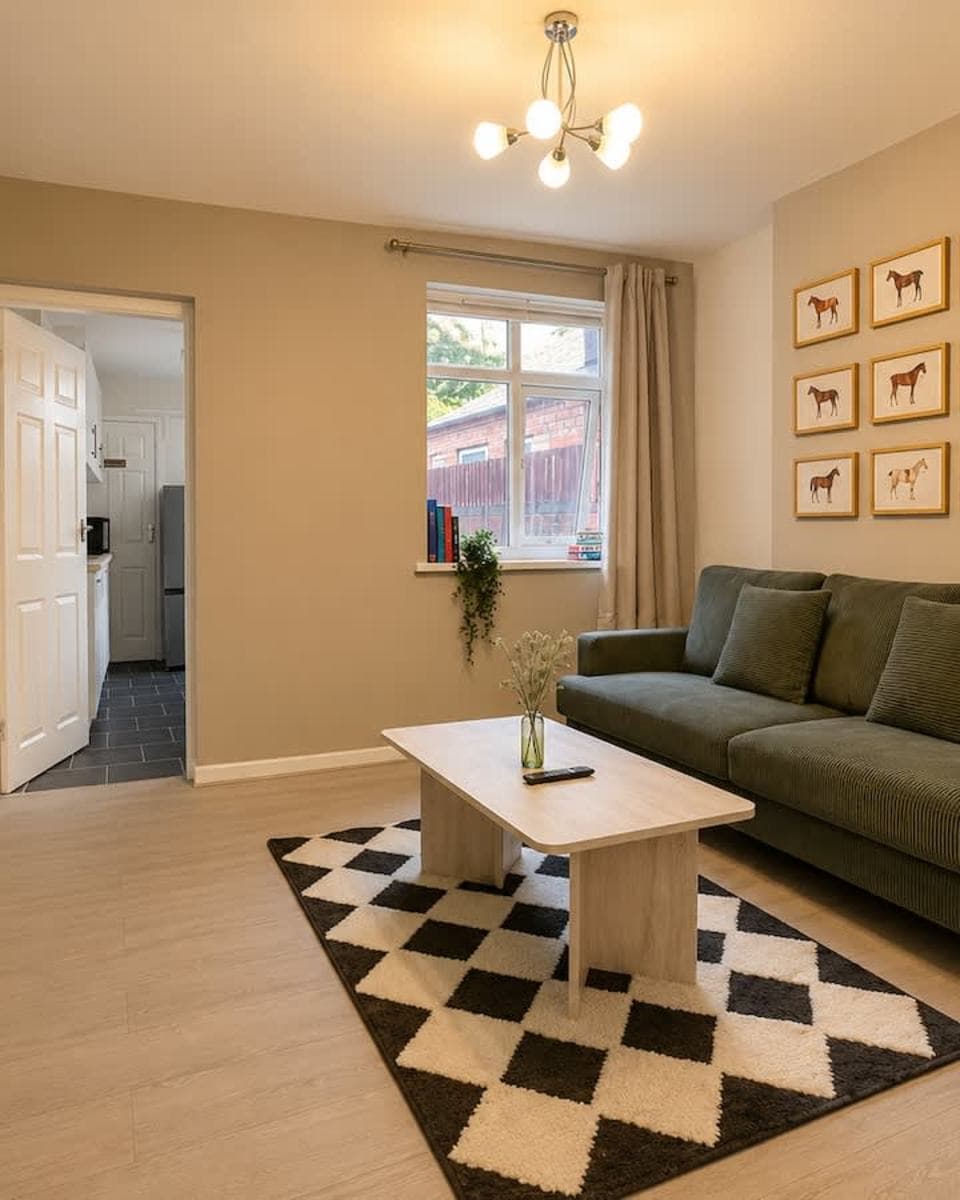
- 3pmNext guest arrivesThe home looks the way it does in the listing photos.
The times are for illustration. Bigger homes need more hands, not a longer window, because the next guest’s check-in time does not move. Early check-ins and late check-outs come out of the same four hours, so a good manager only agrees to them when the cleaning schedule allows.
Room by room: what a proper clean covers
A turnover is not a quick tidy. Airbnb’s ground rules for hosts say every listing should be clean and free of health hazards before check-in, and that hosts should clean between every stay, including laundry, taking out rubbish, vacuuming and wiping surfaces. Airbnb’s current hosting advice, which grew out of its pandemic-era five-step cleaning process, recommends a set routine and a written checklist. That is the simplest way to get the same result every time, whoever is cleaning.
| Room | Every clean | Also check |
|---|---|---|
| Kitchen | Worktops, hob, inside the microwave and fridge, all crockery washed and put away, bins emptied, floor mopped | Food left behind, appliances working, nothing broken or missing |
| Bathrooms | Toilet, basin, bath, shower, tiles and mirrors cleaned, limescale removed, fresh towels, floor mopped | Hair in plugholes, mould on sealant, extractor fan working |
| Bedrooms | Beds stripped and remade with fresh linen, surfaces dusted, floors vacuumed, including under beds | Marks on mattress protectors, items left in drawers, blinds and curtains working |
| Living areas | Dusting, vacuuming, cushions straightened, glass and TV screen cleaned, remotes and switches wiped | Marks on walls and furniture, TV and Wi-Fi working |
| Entrance and outside | Entrance swept, rubbish and recycling in the right bins | Lock box working, keys returned, bin day coming up |
| Whole home | Rooms aired, heating set, lights off | Smoke and carbon monoxide alarms in place and not covered |
A starting point. Every home needs its own version, written down and kept at the property.
Kitchens and bathrooms are where guests look hardest. They forgive a slightly tired sofa; they do not forgive a hair in the shower or crumbs in the cutlery drawer. The ‘also check’ column matters as much as the cleaning, for reasons covered further down.
Cleaning products come under health and safety law. The HSE’s COSHH rules (Control of Substances Hazardous to Health) apply to anyone who employs cleaners, and to self-employed cleaners who take products into other people’s homes. Any product with a hazard symbol on the label counts. In practice: read the safety data sheet, store products safely, provide gloves where the label calls for them, show cleaners how to use each product safely, and swap harsh products for milder ones that do the job. Keep products locked away from guests, especially in homes that welcome children.
Linen and laundry
The usual rule is three sets per bed: one on the bed, one at the laundry and one spare. The spare covers a same-day turnover, a late laundry delivery or a set ruined by a stain. With only two, one delay leaves a bed unmade with a guest due at 3pm.
Treat towels the same way: a bath towel and a hand towel per guest, plus bath mats and tea towels, all in threes. Put washable mattress and pillow protectors on every bed, with spares. They cost far less than a mattress, and a stained mattress is one of the quickest routes to a bad review. With us, you supply the linen and the guest’s cleaning fee pays for washing it. There are two ways to get it washed.
Stained linen should never go back on a bed. A good cleaner pulls the item, notes it and uses the spare. White cotton copes with hot washes and stain treatment far better than coloured linen, which is one reason white is so common in short lets. Linen also wears out. Thin, greying or bobbled sheets show up in guests’ photos, so plan to replace sets from time to time.
Restocking between stays
Each clean ends with a restock, so the next guest finds what the listing promises. Running out of toilet roll on a Saturday night is a small thing that ends up in a review. A typical restock covers:
- Toilet roll and kitchen roll
- Hand soap and shower gel
- Tea, coffee and sugar
- Washing-up liquid and sponges
- Dishwasher tablets
- Bin bags
- Spare light bulbs
- Oil, salt and pepper
Keep a locked store cupboard with a few weeks of stock, so cleaners top up from it rather than shopping mid-clean. As the owner you pay for supplies such as toiletries, tea and coffee; the cleaner’s job is to keep them topped up and flag anything running low.
Checks and reporting at every clean
Between guests, the cleaner is the only person inside your home, so every clean is also an inspection. A good cleaner looks for damage, anything missing, and the slow problems that become expensive if nobody spots them: a dripping tap, a damp patch, a loose hinge, a fridge door that no longer seals.
- Spot itThe cleaner notes the problem during the clean, with a photo and the room it is in.
- Report it the same dayThe report goes to the manager, linked to the stay that has just ended.
- Fix or arrangeSmall things are sorted on the spot; anything bigger gets a tradesperson booked.
- Claim if a guest caused itDamage is raised with the guest or the platform straight away.
Speed matters for two reasons. The next guest arrives within hours, and the platforms set tight time limits on damage claims, so a problem found a week later is much harder to recover. When something is damaged we arrange the repair and handle any claim, and we usually ask before spending over £100. Our guide on when a guest damages your home covers the claims side.
Deep cleans and same-day turnovers
Turnover cleans keep a home guest-ready, but they do not reach everything. Airbnb’s own hosting advice is to schedule a deep clean every two or three months for the jobs that back-to-back turnovers leave behind. A busy home, or one coming off a long stay, may need one sooner. A deep clean typically adds:
- Inside the oven, fridge, freezer and cupboards
- Behind and under furniture and appliances
- Windows, frames, skirting boards and doors
- Grout, sealant and extractor fans
- Washing duvets, pillows, curtains and cushion covers
- Descaling the kettle, shower heads and taps
- Turning mattresses and checking them for marks
Agree with any manager at the start how often deep cleans happen and how they are paid for, so neither side is surprised.
Same-day turnovers
When one guest leaves at 11am and another arrives at 3pm, there is no slack. Same-day turnovers work when the basics are in place: spare linen on site, a lock box so the cleaner never waits for keys, a checklist so nothing is skipped, and enough cleaners for the size of the home. For large homes, a later check-in on changeover days is often better for everyone than a rushed clean.
Cleanliness and your reviews
Guests rate cleanliness on both of the biggest booking platforms. On Airbnb, guests give star ratings for cleanliness alongside accuracy, check-in, communication, location and value. Airbnb’s ground rules say hosts should avoid too many low ratings, and that it may message hosts who receive low ratings; repeated low ratings tell Airbnb a listing is not meeting guests’ expectations.
On both platforms the cleanliness score does not feed the headline number directly, but that does not make it harmless. A guest who finds a dirty bathroom marks the overall score down too, and the written review is what the next guest reads. Airbnb also points out that listings charging a cleaning fee face higher expectations on cleanliness.
We look into every review and fix what caused it. With cleaning, the cause is often one missed item, and adding it to the checklist stops it happening again.
How cleaning fees work
Guests pay a cleaning fee on top of the nightly price, usually once per stay rather than per night, so it weighs more on a short stay than a long one. With us, the cleaning fee covers the clean and washing the linen, and we manage the cleaners and pay them from it.
On Airbnb, the cleaning fee appears as its own line in the price breakdown and is part of the total price the guest pays. UK consumer law points the same way: the Competition and Markets Authority’s guidance says unavoidable charges should normally be included in the total price, and hiding them until later in the booking, known as drip pricing, is illegal. On Booking.com, a cleaning fee is set up as one of the property’s charges and forms part of what the guest pays.
Because the fee sits in the total, it affects how competitive your home looks. Airbnb says its search ranking takes total price into account, and it lets hosts set a lower cleaning fee for one- and two-night stays. Its advice is that the fee should cover the cost of cleaning and supplies, not make a profit. A cleaning fee also covers a normal turnover only: Airbnb says unexpected mess, such as stains or smoke smells, is not covered by it and may be claimable under its host damage protection instead. Our guide to running costs, line by line shows where cleaning sits among everything else.
Questions owners ask
Do guests have to clean before they leave?
No. A guest paying a cleaning fee expects to leave the home in a normal, tidy state, not to clean it. Simple requests such as putting rubbish in the bin and switching things off are fine; a long list of chores tends to show up in reviews.
How many towels does each guest need?
A bath towel and a hand towel per guest for each stay, plus a bath mat for each bathroom and tea towels for the kitchen. Keep three sets of each, as with bed linen, so there is always a clean spare.
What if a guest leaves the home very dirty?
That goes beyond a normal turnover. Airbnb says stains, smoke smells and similar mess are not covered by the cleaning fee and may be claimable under its host damage protection. Report it at the very next clean, with photos, because claim deadlines are short.
Can I use a cleaner I already know?
Ask any manager you are considering. Whoever cleans needs to work to a written checklist, fit a fixed changeover window, handle same-day turnovers and report problems the same day.
Do I need a clean after I stay in my own home?
Yes, if a guest is due after you. Every arrival should find the home exactly as the listing shows it, whoever stayed there last.
- HSE: COSHH basics
- GOV.UK (CMA): providing clear and accurate information about prices, summary
- Airbnb: ground rules for home hosts
- Airbnb: ratings for homes
- Airbnb: add additional fees to home listings
- Airbnb: everything you need to know about cleaning fees
- Airbnb: how to put Airbnb’s 5-step cleaning process into practice
- Booking.com for partners: everything you need to know about guest reviews