In this guide
- Before going live, the home needs furniture, linen, keys, two lock boxes and a working kitchen. Buy for hard wear and easy washing, not for show.
- Safety comes first: interlinked smoke alarms, a kitchen heat alarm, carbon monoxide alarms by any gas or solid fuel appliance, labelled fire-safe furniture and a gas safety check every 12 months.
- Work guests want fast Wi-Fi, a desk and a washing machine; holiday guests want comfort and local tips. Furnish for both, then photograph every bed in daylight.
What has to be in place before you go live
Guests expect a home that works from the moment they open the door. Before we take a home live, it needs to be fully furnished, with linen and towels, keys, two lock boxes (so a spare key is always on site if a guest or cleaner gets locked out) and the kitchen basics guests expect, such as pans and utensils. If you are starting from an empty home, we can point you to suppliers, though there is no set list you have to use.
The booking platforms set a floor too. Airbnb strongly encourages every host to provide toilet paper, soap for hands and body, one towel and one pillow per guest, and linen for each guest bed, and says listings that tick its Essentials box without providing them may be penalised. Treat that as the minimum, with more for longer stays and bigger groups.
Room by room
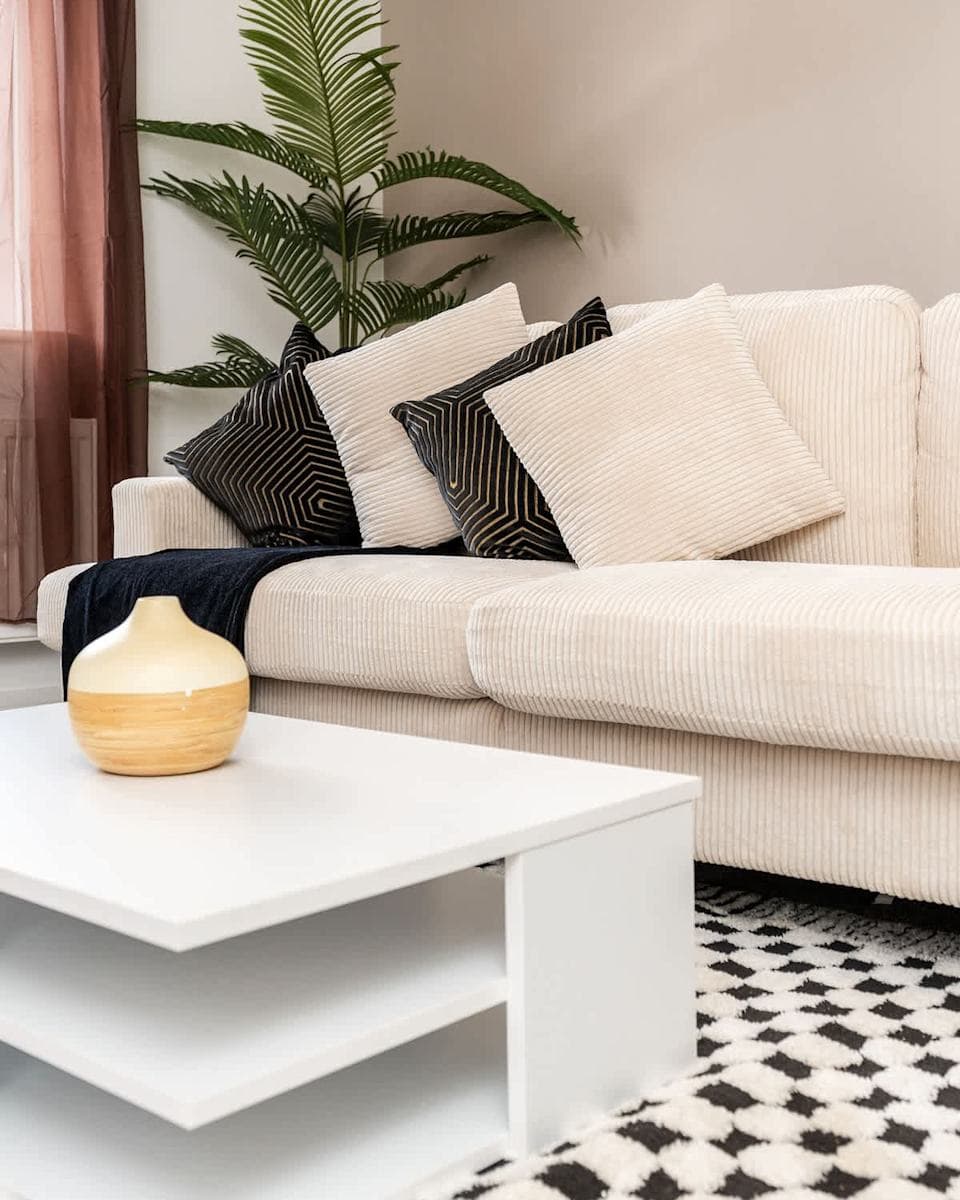
Buy for the guest who checks in on a wet Tuesday in November, not for the photos. Short-let furniture takes more wear in a year than a family home takes in several, so solid, simple and easy to replace beats delicate and expensive. Choose sofas with removable, washable covers in mid-tones, wood or metal tables over glass, and hard floors or short-pile rugs over pale carpet in living areas.
| Room | Get right | Avoid |
|---|---|---|
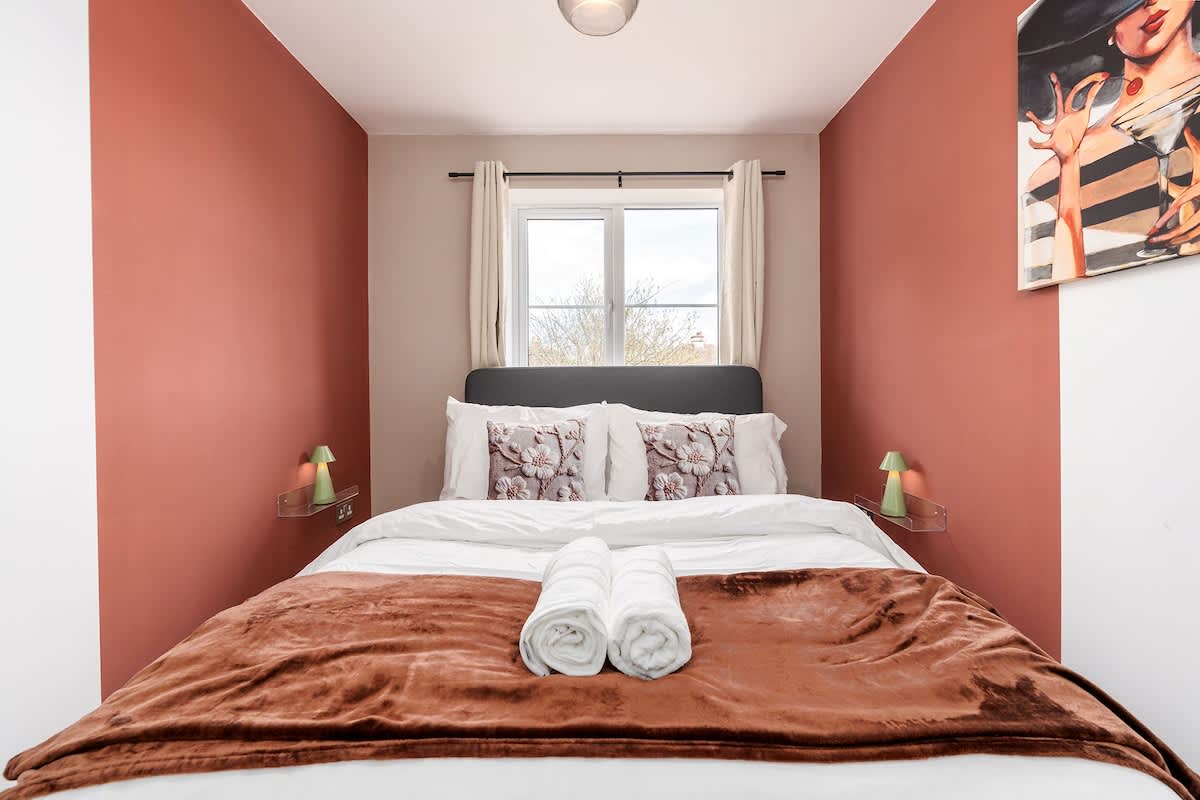
| Bedrooms | A good mattress with a protector, blackout blinds or curtains, bedside lamps and sockets, hangers | Odd bed sizes that need hard-to-find linen |
| Bathroom | A strong shower, an extractor fan, a hairdryer, a bath mat, spare toilet rolls | Tired silicone and grout, which show in photos |
| Living area | A seat for every guest, lamps, a smart TV guests can sign into | Glass tables and pale fabric sofas |
| Hallway | Hooks, a shoe rack, a clear route to the front door | Clutter on the stairs or by the exit |
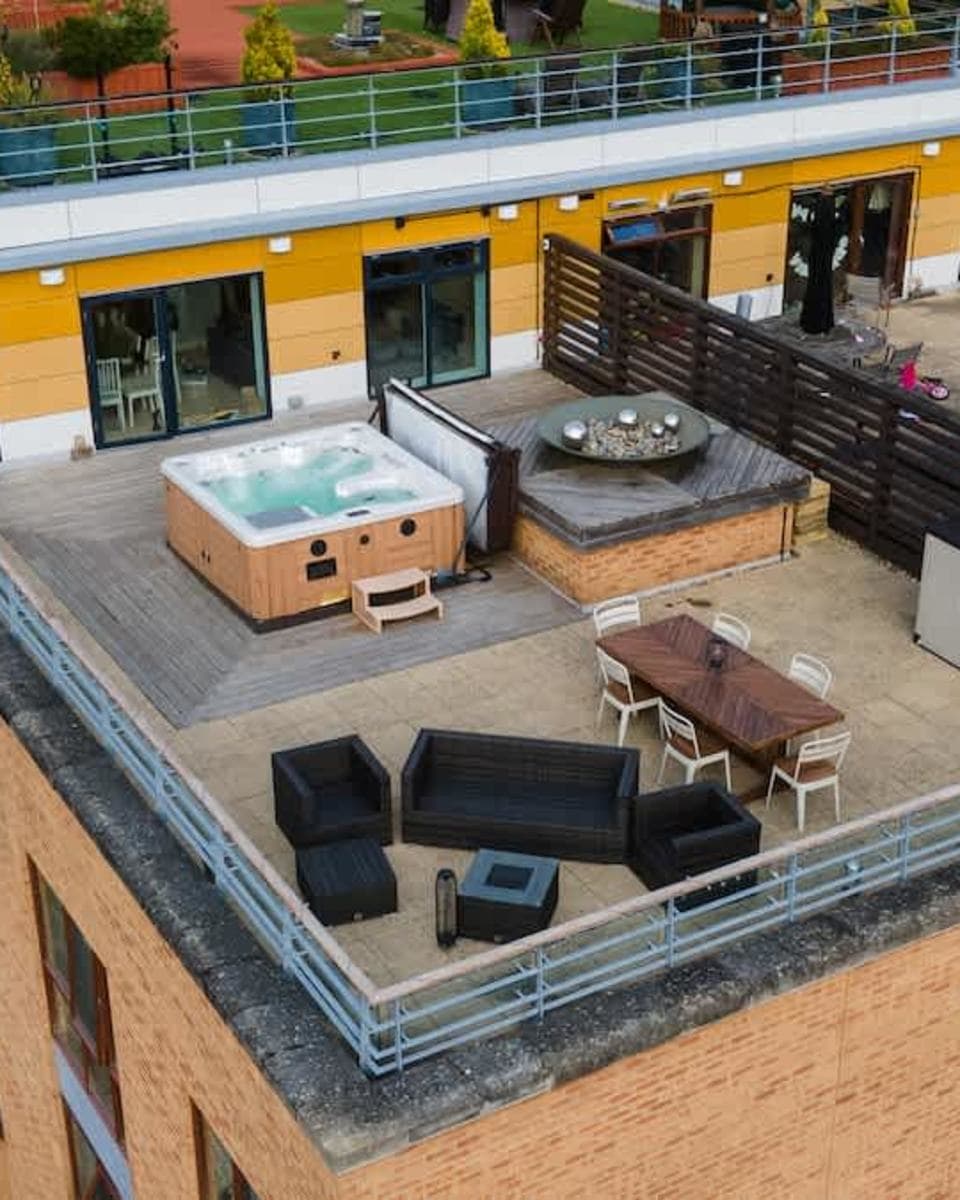
| Outside | Weatherproof seating, a light by the door, labelled bins | Cushions that live outdoors |
A starting point. Your layout and the guests you attract will shape the rest.
Beds and mattresses
Beds matter more than any other furniture. Stick to standard UK sizes so linen is easy to buy and replace: single (90 x 190 cm), double (135 x 190 cm), king (150 x 200 cm) and super king (180 x 200 cm). Zip-and-link beds, two long singles (90 x 200 cm) that join into a super king, give you a room that suits a couple one week and two colleagues the next. A sofa bed counts as a bed: give it a proper mattress and its own linen.
Choose a medium-firm mattress that suits most sleepers, and put a waterproof mattress protector and pillow protectors on every bed, with a spare set in the cupboard. Two pillows per guest, plus a spare duvet and blanket, covers most requests.
Linen and towels
Plan on three sets of linen per bed: one on the bed, one in the wash and one spare for a quick turnaround or an accident. Do the same with towels: a bath towel and a hand towel per guest, and a bath mat for each bathroom. White is the practical choice: it washes hot, does not fade, and a stain can be treated without leaving a pale patch. Polycotton creases less and dries faster than pure cotton.
Kitchen and laundry
A kitchen where guests can cook a real meal matters more the longer they stay. Equip it for the maximum number of guests, plus a few spares, because glasses and mugs get broken and go missing.
Skip gadgets that rarely get cleaned; a cafetière or simple pod machine is plenty. Tea, coffee and other supplies are an ongoing cost for you, so keep a labelled stock that is easy to top up.
For anything longer than a few nights, a washing machine is close to essential, and a tumble dryer or washer-dryer earns its place in a UK winter. Work guests and families placed by insurers while their own home is repaired often stay for weeks, and these stays fill quieter months. England’s fire guidance suggests a heat alarm rather than a smoke alarm in a utility room where steam could set off false alarms.
Wi-Fi, a workspace and who you are furnishing for
For remote workers, contractors writing up reports and families streaming on a rainy day, Wi-Fi is not an extra. Get fibre broadband where it is available, put the router somewhere central, and add a mesh system if the signal drops in the far bedrooms.
Test from a bedroom, not just beside the router, and retest after changing provider: Airbnb holds hosts responsible for the speed shown. For work guests, aim for at least the video call band, and add a proper workspace: a desk, a supportive chair, a lamp and a socket within reach. A dining table does not count if four people also eat at it.
Work and holiday guests want different things, and the homes that book well cater for both. We fill quieter gaps with longer work stays, from contractors and site crews to NHS and project staff, so these details pay off all year.
Safety must-haves
Once anyone pays to stay, even for one night, fire safety law applies: in England and Wales, the Regulatory Reform (Fire Safety) Order 2005. You must carry out a fire risk assessment and record what you find. In England, Home Office guidance on small paying guest accommodation sets out what is expected in homes sleeping up to 10 people.
The guide expects interlinked smoke alarms in hallways, stairs, living rooms and bedrooms, and a heat alarm in every kitchen, all mains-powered with a battery backup, so one alarm sets them all off. Sealed battery alarms are only a short-term measure. Carbon monoxide alarms should go wherever there is a gas or solid fuel appliance, such as a boiler or wood burner. Exit doors must open from inside without a key, and in a house a torch in each bedroom can stand in for emergency lighting.
A kitchen fire blanket is optional in the guide’s examples for a house, but cheap to add. A first aid kit is not a legal requirement either, but guests do cut fingers in unfamiliar kitchens.
Upholstered furniture, beds, headboards, mattresses, sofa beds and cushions supplied in a let must meet the Furniture and Furnishings (Fire) (Safety) Regulations 1988. A permanent label on upholstered furniture shows it complies, so never cut labels off, and avoid second-hand pieces that have lost theirs. Mattresses and bed bases do not need the permanent label, but must still meet the fire tests, so buy them new from a reputable seller and keep the maker’s label on. A 2025 amendment removed the separate display label required at the point of sale, not the permanent label. The government has been consulting on replacing the 1988 rules, so check the current position on GOV.UK before a big furniture order.
Book the gas and electrical checks early. HSE’s gas rules cover holiday accommodation: every gas appliance and flue needs a safety check every 12 months by a Gas Safe registered engineer, and you keep the record. England’s five-yearly electrical rules are written for tenancies, but an electrical installation condition report (EICR) is the clearest proof the wiring is safe. In Scotland, an EICR and portable appliance testing are licence conditions.
Scotland and Northern Ireland have their own rules. Our guides to fire safety and gas and electrical checks go through each nation in detail.
Parking, outdoor space, storage and access
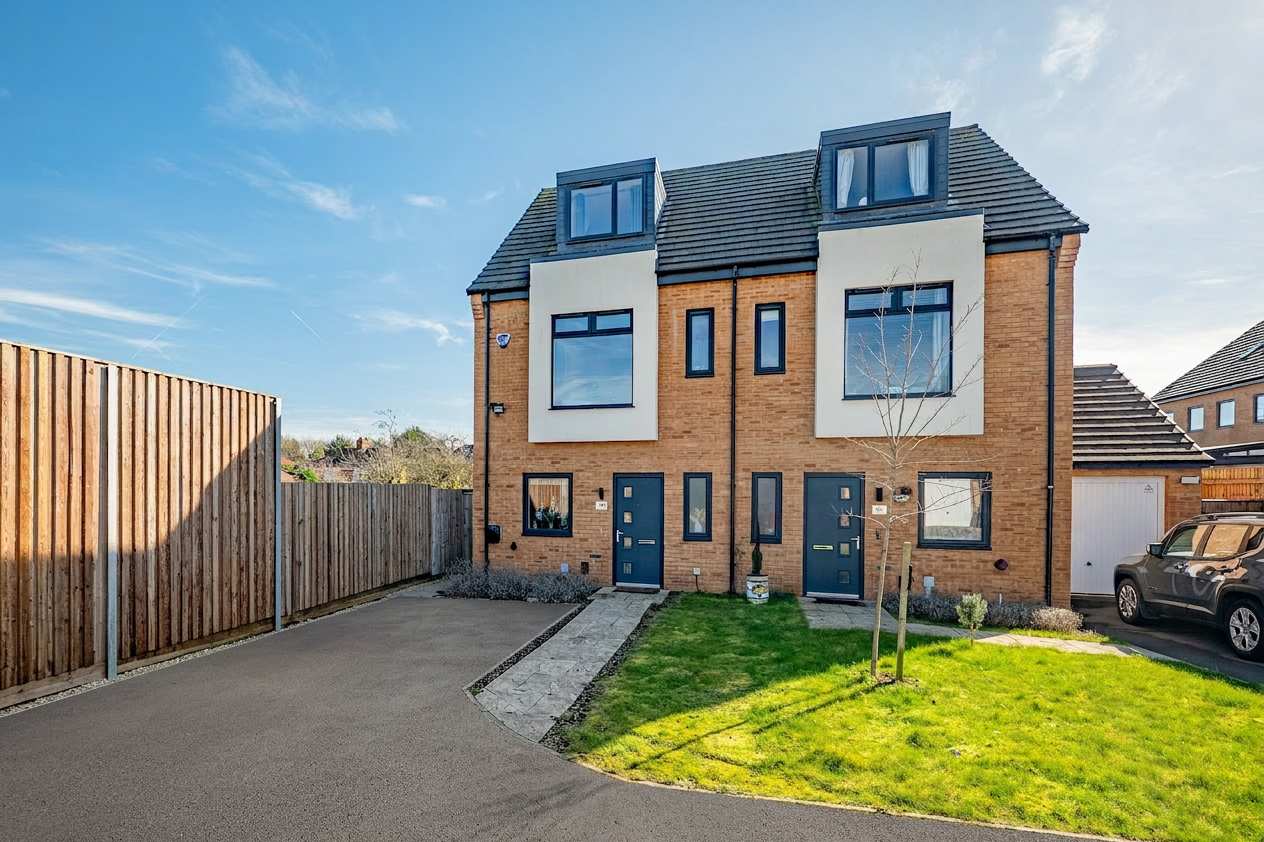
Tell guests exactly where to park before they arrive. If the street needs a permit, find out how guests get one. Work guests often arrive in vans, so say honestly whether a van will fit.
Outdoor space helps sell summer stays if it looks cared for. Choose furniture that can stay out or folds away, light the path to the door and decide your barbecue rule before the first guest asks.
Keep one lockable cupboard for your own things, and a separate store the cleaners can open for spare linen, cleaning stock, bulbs and batteries. Take anything precious or irreplaceable out of the home altogether.
You do not have to adapt your home for disabled guests, but you do need to describe it accurately. Say how many steps there are to the door, whether there is a bedroom and bathroom on the ground floor, how wide the narrowest door is, and whether the shower is walk-in or over a bath. Families with pushchairs read the same details.
Airbnb lets you list accessibility features such as step-free access, wide doorways, a step-free shower and fixed grab rails, but each needs at least one clear photo, and doorway widths need a tape measure in the shot. Only list what is really there: a suction-mounted grab rail does not qualify.
The house manual and the photos
A good house manual answers the questions guests would otherwise message about late at night. Keep it short, leave a printed copy in the home and share it before arrival. Fire safety guidance expects some of it.
- Arrival: the lock boxes, which key opens what, and where to park.
- The Wi-Fi name and password, the heating, the hot water and how each appliance works.
- Fire: the escape route, the exit doors and what to do if an alarm sounds, including the carbon monoxide alarm.
- The full address and postcode, for anyone calling 999.
- Bin and recycling days, and house rules on noise, smoking and pets (overflowing bins upset neighbours fast).
- Local information: the nearest shop, pharmacy, GP and A&E, transport links and a few places to eat.
Photos decide whether a guest clicks. Photography is a one-off cost, priced separately and agreed before you sign, so finish the home first: every bulb working, beds made with the final linen, surfaces clear.
- Shoot in daylightOpen every blind and switch the lamps on too, so rooms look bright but natural.
- Go wide, from a cornerShoot from a corner at chest height to show the whole room.
- Photograph every bedGuests count beds and check sizes, so show each one, sofa beds included.
- Show the view and the outsideA garden, a balcony, a parking space or a glimpse of the sea can win the booking.
The weeks before going live
Most delays come from lead times: broadband installs, furniture deliveries and engineer visits. Work back from the date you want your first guest. These timings are a typical order, not fixed rules.
- 6 to 8 weeks beforeCheck you are allowedYour mortgage lender, insurer, any lease and any local registration or licence.
- 4 to 6 weeks beforeBook the checksGas safety check, electrical report, alarms fitted and the fire risk assessment done.
- 3 to 4 weeks beforeOrder furniture and broadbandBeds, mattresses and sofas can take weeks to arrive, and so can a new line.
- 2 weeks beforeKit it outLinen, towels and kitchen kit in, lock boxes fitted and keys cut.
- The final weekFinish and testDeep clean, make the beds, write the house manual and try everything a guest will use.
- LaunchPhotos, then liveOnce the home is finished, photos and listings come first. With us, homes are usually live within about three days of signing.
Before you buy anything, check the home suits short lets. Our guides to whether your home is right for short lets, mortgages, insurance and leasehold flats cover those checks.
Questions owners ask
Do I have to furnish the home myself?
Yes. The home needs to be furnished, with linen, keys, two lock boxes and kitchen basics, before it goes live. If you need help, we can point you to suppliers, but there is no set list you have to use.
Can I use the furniture I already have?
Usually, if it is in good condition and the upholstered pieces still carry their permanent fire safety labels and the mattresses still have the maker’s fire safety label. Replace anything stained, sagging or unlabelled before guests arrive.
Should I leave toiletries and food for guests?
Toilet paper, hand soap and shower gel are expected, and tea, coffee, salt, pepper and cooking oil are a welcome start. These supplies are a running cost for you. A bigger welcome pack is a nice touch but not needed.
Is a sealed 10-year battery smoke alarm enough?
Not for the long term in England. The government guidance for small paying guest homes treats sealed battery alarms as a short-term measure and expects interlinked, mains-powered alarms with a battery backup.
How fast does the Wi-Fi need to be?
Fast enough for a video call from every bedroom. Airbnb’s own bands put video calls at 25 Mbps download and above, and listings at 50 Mbps or more show a Fast wifi label.
- GOV.UK (Home Office): Making your small paying guest accommodation safe from fire
- legislation.gov.uk: The Furniture and Furnishings (Fire) (Safety) (Amendment) Regulations 2025
- HSE: Gas safety, who is a landlord?
- gov.scot: Short-term lets licensing, guidance for hosts and operators
- DWP: Family Resources Survey, financial year 2024 to 2025
- Airbnb: Providing essential amenities for guests
- Airbnb: Check the wifi speed for a place
- Airbnb: Add accessibility features to listings