In this guide
- Once guests pay to stay, your home falls under the Fire Safety Order, even for one night. You are the responsible person, and anyone managing the let for you can share that duty.
- You must carry out a fire risk assessment and write all of it down, then review it at least once a year and after any change to the home.
- A typical small home needs interlinked smoke alarms, a heat alarm in the kitchen, carbon monoxide alarms near fuel-burning appliances, solid doors on the escape route and exit doors that open without a key.
Why fire law treats a short let as a business
The Regulatory Reform (Fire Safety) Order 2005, usually called the Fire Safety Order, covers almost every building in England and Wales except private homes. The Home Office says that once guests pay to stay, your home is unlikely to count as a private home, even for one night. The fire and rescue authority makes the final call, but you should assume the Order applies.
Its duties fall on the responsible person: whoever has control of the premises. That is usually you as the owner, and a manager who runs the home can be one too. Paying someone else to do the work does not pass the duty on.
Put who does what in writing. Agree who keeps the risk assessment, who tests the alarms between stays and who arranges repairs. If you hand the home to a new responsible person, the law requires you to pass on the assessment and other fire safety information.
Doing the fire risk assessment
A fire risk assessment is a structured look at your home: what could start a fire, who would be at risk and how they would get out. For a simple home you can do it yourself using the Home Office guide for small paying guest accommodation, which covers self-catering lets and includes a checklist. First check your home fits it.
If any answer is no, or you do not feel confident doing it yourself, the Home Office advises using a competent fire risk assessor. You stay responsible for the result, so read what they write and act on it. If your home does fit, these are the steps.
- Walk the escape routeGo from each bedroom to the front door as a guest would at night.
- Find what could start a fireCookers, heaters, log burners, chargers, candles and tired wiring.
- Think about who is at riskGuests do not know your home, and some will be children or slow to move.
- Fix what you foundAlarms, doors, locks and lighting, each with a date and a named person to do it.
- Write it all downThe full findings, how you manage fire safety, and the name and firm of anyone who helped.
- Review itYearly, and after any change to the layout, beds or furniture, or after a fire.
Since 1 October 2023, section 156 of the Building Safety Act 2022 has required every responsible person in England and Wales to record the whole assessment, not just the main findings, along with their fire safety arrangements. Before that, many small owners did not have to write anything down. Keep a copy your manager can reach, because a fire safety inspector can ask to see it.
What a typical small home needs
The Home Office guide works through example homes and says what it would expect in each. The table pulls out four common types. Use it as the yardstick for your own assessment, not a replacement for one.
| Home | Alarms | Escape route | Lighting and equipment |
|---|---|---|---|
| Studio flat in a purpose-built block | Mains smoke alarm in the main room | Self-closing fire door to the flat; cooker away from the entrance | Extinguisher (not dry powder) and fire blanket in the kitchen; fire action notice |
| Two-bedroom flat with a hallway | Interlinked smoke alarms in hall, lounge and bedrooms; heat alarm in the kitchen | Hall protected by solid doors; self-closing fire door to the flat | Extinguisher and fire blanket optional |
| Three-bedroom house on two floors | Interlinked smoke alarms in hall, landing, lounge and bedrooms; heat alarm in the kitchen | Hall and stairs protected by solid doors; no self-closers needed | Torches in bedrooms or night lights on the stairs and hall |
| Two-storey cottage with a log burner and bottled-gas cooker | As the house, plus carbon monoxide alarms in the lounge and kitchen | As the house | As the house, plus instructions for the stove and cooker |
Summarised from the worked examples in the Home Office guide for small paying guest accommodation (England).
Two layouts cause most problems. A bedroom you can only reach through another room, an inner room, should not be used for sleeping unless it is on the ground floor with its own door or a large window straight outside. An open-plan ground floor removes the protected route the examples rely on, which puts the home outside the small-premises guide.
Smoke, heat and carbon monoxide alarms
Alarms are the first thing to get right. The guidance expects smoke alarms in halls, landings, stairs, lounges, dining rooms and bedrooms, with a heat alarm in the kitchen and any utility room, where steam would set a smoke alarm off. Every alarm should be interlinked, by wiring or radio, so a fire in the kitchen wakes a guest asleep upstairs.
Aim for mains-powered alarms with a sealed backup battery, known as Grade D1. Long-life sealed battery alarms (Grade F1) are accepted as a stopgap for two to three years. Check the alarms are loud enough to wake someone in each bedroom with the door shut.
Fit a carbon monoxide alarm in any room with a gas or solid-fuel appliance, such as a boiler, gas fire or log burner. The 2022 alarm rules you may know from long lets cover tenancies of a tenant’s main home, so they do not normally reach holiday stays. The fire safety guidance still expects carbon monoxide alarms.
- Every changeoverTest and checkTest the alarms, check exit doors open easily and escape-route doors close, and test any torches.
- Every yearService and reviewGas safety check, chimney sweep, service of any extinguishers or emergency lighting, and a review of the assessment.
- Every five yearsElectricsThe electrical installation inspected and tested by a qualified electrician.
- About every ten yearsReplace alarmsReplace smoke and heat alarms by the date on the alarm.
In a home without staff on site, the Home Office suggests doing its weekly and monthly checks at every change of guest, so whoever cleans should know how to test an alarm and who to tell if one fails. Our guide to gas and electrical checks covers the rest.
Doors, locks and the way out
The guidance relies on a simple plan: guests hear the alarm early and walk out along a route that smoke takes time to reach. That depends on the doors along the route, and on the front door opening first time, in the dark, without a key.
Locks need extra thought in a short let, because guests often deadlock the front door at night and leave the key in a bag. Exit doors must not need a key to open from the inside, so fit a thumb turn on the front and back doors, and check any gate on the way out opens as easily.
Exit signs are rarely needed where the way out is obvious; add them where it is not. Bigger homes may need proper emergency lighting rather than torches. Keep the hall and stairs clear, and ask guests to close the kitchen and lounge doors at night.
Guests are not expected to fight a fire: the safest thing is to get out and call 999. You may provide a small extinguisher and fire blanket in the kitchen. If you do, choose a multi-purpose type rather than dry powder and have it serviced every year.
Furniture and what to tell guests
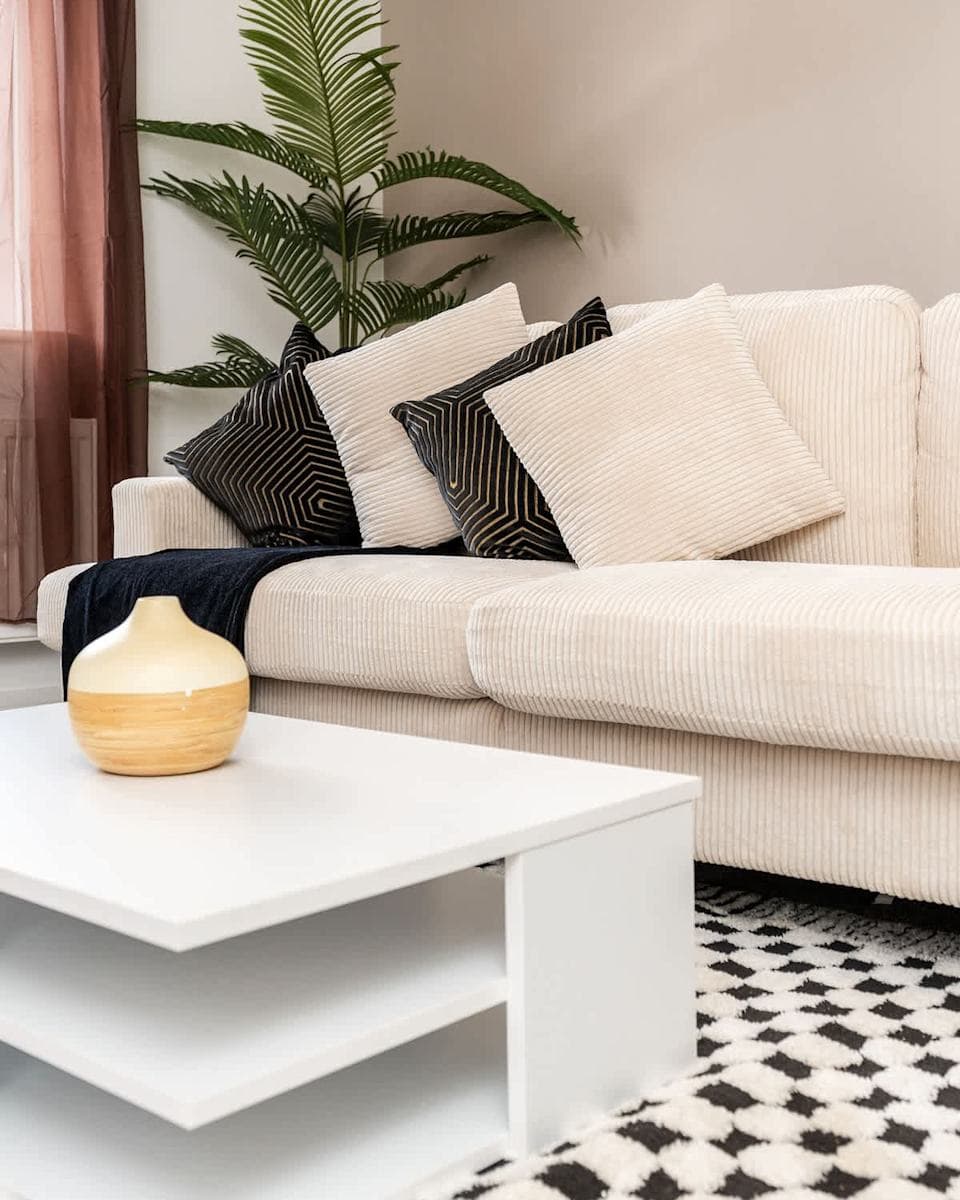
The Furniture and Furnishings (Fire) (Safety) Regulations 1988 cover upholstered furniture in holiday lets: sofas, armchairs, beds, headboards, mattresses, cushions and pillows. New items carry a permanent label showing they meet the standard. Leave labels on and keep receipts or photos. Bedding, curtains, carpets and furniture made before 1950 are not covered. Replace second-hand upholstered furniture with no label.
Guests also need to know what to do before anything goes wrong. A simple plan on the back of each bedroom door or in the welcome pack works well, with the same details in the guide guests read before arrival.
In a block of flats, the freeholder or managing agent is usually the responsible person for the common parts and, in England, must give residents fire safety instructions. Ask for them. If the building’s plan is stay put, tell guests, and tell them never to use the lift in a fire. See our guide to leasehold flats.
Inspections and penalties
Fire and rescue services enforce the Order. An inspector can visit, ask to see your risk assessment and give advice. For serious failings they can serve an enforcement notice setting out what to fix and by when, or, where the risk to life is serious, a prohibition notice that stops the home or part of it being used until it is put right.
The Home Office guide is official guidance under the Order, and a court can treat following it, or departing from it, as evidence of whether you met your duties. A written assessment that follows the guide, plus a record of alarm checks, is the best answer you can give an inspector.
Wales, Scotland and Northern Ireland
Wales uses the same Fire Safety Order. The Welsh Government’s own guide to making guest accommodation safe from fire covers self-catering homes and closely matches England’s, and the duty to record the full assessment applies there too. See holiday lets in Wales.
Scotland has its own law, the Fire (Scotland) Act 2005, and fire safety is built into short-term let licensing. A licence needs a fire risk assessment, adequate heat, smoke and carbon monoxide alarms, instructions for guests if the carbon monoxide alarm sounds, and furniture that meets the rules, with labels, receipts or photos as proof. See short lets in Scotland.
Northern Ireland uses the Fire and Rescue Services (Northern Ireland) Order 2006 and the Fire Safety Regulations (Northern Ireland) 2010. A fire risk assessment is required, and the Northern Ireland Fire and Rescue Service publishes a fire safety guide for small self-catering premises. You also need a Tourism NI certificate to let holiday accommodation there.
Questions owners ask
Does fire safety law apply if I only let my home for a few weeks a year?
Yes. The Home Office says the Order can apply from the first paid night. What matters is that guests are paying to stay, not how often they do.
Are battery smoke alarms good enough?
As a short-term measure. Long-life sealed battery alarms are accepted for two to three years, but the guidance expects interlinked mains alarms with a backup battery in the end. Mains alarms that interlink by radio save running new cable between them.
Do I need a carbon monoxide alarm if the only gas appliance is the hob?
The long-let rules leave out gas cookers, but the fire safety guidance for paying guests does not. Its cottage example, with a bottled-gas cooker and a log burner, puts carbon monoxide alarms in both the kitchen and the lounge. Fitting one costs little and removes the doubt.
Who is at fault if my manager forgets to test the alarms?
Both of you can be. A manager with control of the home can be a responsible person, but that does not remove your own duty. Ask for a record of the checks made at each changeover.
Can I change the front door of my flat to a fire door?
Usually you will need the freeholder’s consent, because the front door of a flat often forms part of the building’s fire protection and may not be yours to change. Check your lease first.
- GOV.UK (Home Office): Making your small paying guest accommodation safe from fire
- GOV.UK: Fire safety responsibilities under section 156 of the Building Safety Act 2022
- Welsh Government: A guide to making your guest accommodation safe from fire
- legislation.gov.uk: Regulatory Reform (Fire Safety) Order 2005, article 32 (offences)
- legislation.gov.uk: Smoke and Carbon Monoxide Alarm (England) Regulations 2015, regulation 2
- mygov.scot: Legal requirements for short-term let accommodation
- VisitBritain: Fire safety of furniture and furnishings